
What makes a good organisational system?
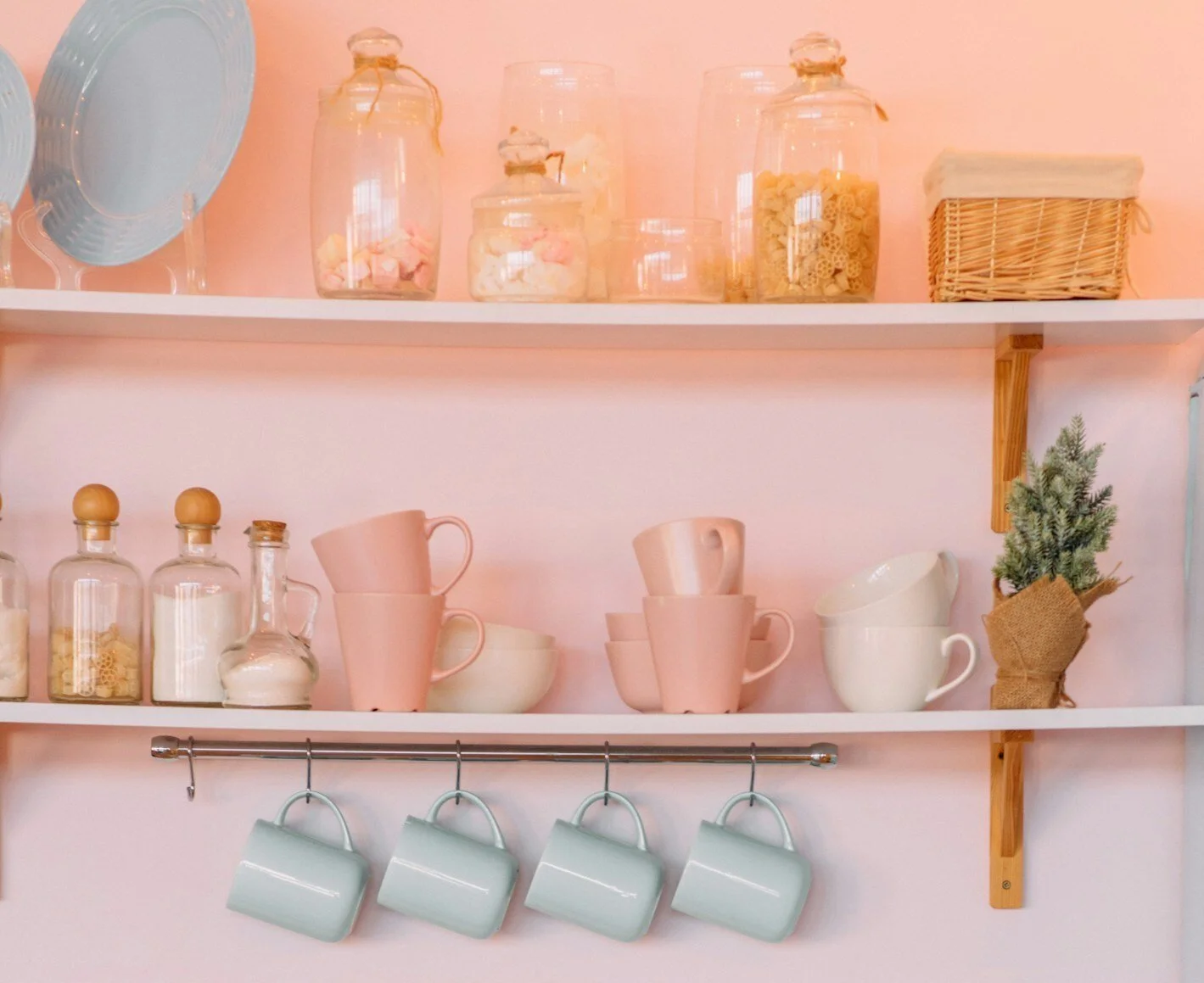
It's one of the most common things I see in clients' homes: a cupboard full of matching bins, baskets and drawer dividers, bought with the best of intentions and now either half-empty or stuffed to overflowing. Storage products are brilliant, but on their own they don't create order. A bin is only as good as the system behind it.
"In organizing your living space, the goals are to off-load some of the memory functions from your brain and into the environment; to keep the environment visually organized, so as not to distract you when you're trying to relax, work or find things; and to create designated places for things so that they are easy to locate." (Daniel Levitin, The Organized Mind)
I love this quote because it explains why getting organised feels so good (I've written more about that in The Mental Health Benefits of Getting Organised). Your home should be doing some of the remembering for you. When I'm creating organisational systems for my clients, I think about it in terms of the following criteria.
Simple = Sustainable
Things must be easy to find, retrieve and put away. In practical terms, this means keeping physical barriers and extra steps in the take-out and put-away process to a minimum. If you have to lift a lid, unstack two boxes and then open a drawer, that item won't make it back to its home.
Begin by identifying the items you use most often and place them in easily reachable locations. Items used less often can be relocated to less accessible spots, such as high shelves, under the bed or the back of a cupboard. Ideally, solve the problem where it happens. For example, put daily kitchen utensils in a pot on the worktop and the Christmas cookie cutter at the back of a drawer. (If your kitchen is the room that needs the most help, have a read of Get Your Kitchen Organised Once and for All!)
The fewer categories you have, the better. A system with twenty finely divided sections might look impressive on day one, but it's the simple ones that are still working six months later.
Logical
Start by grouping and containing like items together. I've got no hard and fast rules about how to categorise items, but it needs to make sense to you and your household, otherwise you are going to come unstuck. One family might keep all batteries, chargers and cables together in a "tech" drawer; another might prefer to store chargers by the bed and batteries with the torches. Both are right, as long as everyone knows where to look.
A good test is to ask yourself: if someone else in my home needed this, where would they look first? That's probably where it should live.
Visible & Accessible
We tend to forget about what we can't see, which is how we end up buying a third bottle of olive oil or a duplicate pair of scissors. Visibility can mean open shelving, items displayed so you can see what you have at a glance, clear containers, or clearly labelled bins and drawers. For little ones, use icons or pictures on labels so they can find and put away their own things before they can read.
Accessible also means no overstuffing. If a drawer is so full that it's a struggle to close, the system will break down quickly. Leave a little breathing room so things can go back easily. My Effortless Wardrobe Organisation guide shows how this works in practice with clothes.
So, When Should You Buy the Bins?
Last! Here's the order I'd follow:
Declutter first. There's no point in organising things you don't use, need or love. If you're short on time, my post on How to Declutter Fast will get you started.
Group like with like so you can see exactly how much of each category you have.
Decide where each category will live, based on how often you use it.
Measure the space (width, depth and height) before you go shopping.
Then buy containers that fit both the space and the quantity of items you're actually keeping.
Buying storage first is one of the main reasons homes feel cluttered even after a big tidy-up. If that sounds familiar, you might find Why Clutter Accumulates & What to do About it and Unraveling the Reasons Your Space Feels Untidy helpful too.
Need a Hand?
If you'd rather skip the trial and error, this is exactly what I do. Space planning and product research are included in my home organisation service, so you'll only buy what you need, and it will fit first time. Curious about what's involved? Take a look at how much a professional organiser costs in London, or get in touch to book a consultation.